
Bible kya hai Ideas: Simple Ways to Explore the Bible
Bible kya hai is a question that people ask for many different reasons. A student may be preparing for a class, a neighbour may be curious about a friend’s faith, and a parent may want to answer a child honestly. Whatever brought you here, the Bible has been read, copied, translated, sung, and debated for thousands of years. That long history leaves you plenty of room to explore it in your own way, at your own speed.
This guide is built around ideas rather than rules. You will find simple starting points for new readers, creative ways to retell old stories, and activities that suit kids, families, and study groups. Some ideas are quiet and personal, while others are lively and shared with friends. Think of the post as a menu with no wrong order. Read it from top to bottom, or jump to the section that catches your eye and try what feels right.
Best Bible kya hai Ideas to Explore
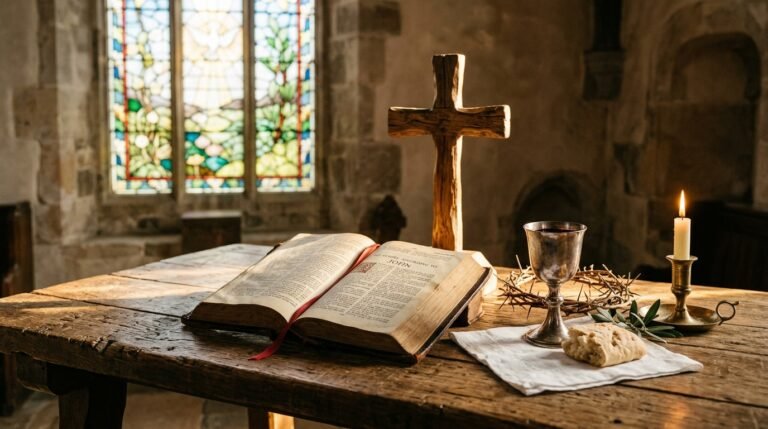
The best Bible kya hai ideas begin with one plain fact: the Bible is not a single book but a library. It gathers dozens of writings, including history, law, poems, letters, and short biographies, collected over roughly fifteen hundred years. Urdu speakers call it Kitab-e-Muqaddas, and Christians treat it as sacred scripture. Seeing it as a library already gives you creative choices, because you can walk to whichever shelf interests you most. Nobody has to begin at page one.
In the sections below, ideas are grouped around different goals. Some explain the basics, such as books, testaments, and languages. Others help you remember verses, tell stories, plan group discussions, or learn how the Bible reached your hands. Each idea stands on its own, so you can mix them freely. Over time you will build a reading style that fits your age, your daily schedule, and the questions you carry with you. Take your time with each one.
Bible kya hai Ideas for Beginners
If you are brand new, start small. Try answering Bible kya hai in a single sentence: it is a collection of sacred writings that Christians believe record God’s dealings with people and His plan to save them. Then pick one short book, such as the Gospel of Yuhanna, and read a single chapter each day. A small and steady start feels far friendlier than opening page one and pushing through every page in a hurry.
Keep a notebook beside you while you read. Write down names you do not know, places you cannot picture, and questions that pop up along the way. A simple map and a basic timeline of Bible events can answer many of them. After a few weeks, the notebook becomes your own personal guide, written in your words and shaped by what you actually wondered about. It is also pleasant to look back on and see how far you have come.
Bible kya hai in Urdu Ideas
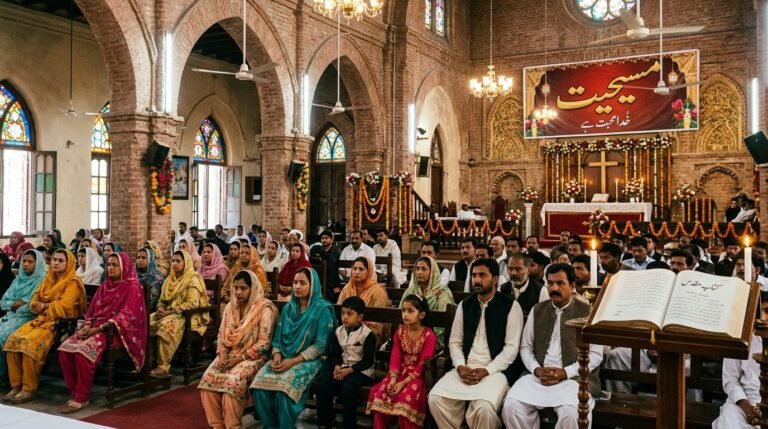
Reading in your own language changes the whole experience. The Urdu Bible, known as Kitab-e-Muqaddas, lets Urdu speakers meet the text without translating in their heads. When you search Bible kya hai in Urdu, you will notice familiar names with a local sound: Paidaish for Genesis, Zaboor for Psalms, Injeel for the Gospel, and Yuhanna for John. Learning these names early makes every later chapter easier to follow. Many readers keep a small list of them on the inside cover.
A good idea is to read one passage in Urdu and the same passage in English, side by side. The pairing builds vocabulary in both languages and shows how a sentence can shift slightly in translation. Audio recordings in Urdu are another gentle option, especially for people who prefer listening while walking, cooking, or travelling to work. Families who speak Urdu at home often find this the most natural way to begin together. Even ten minutes a day adds up.
Bible ki Kitaabon ko Samajhne ke Ideas
Most Protestant editions of the Bible contain sixty-six books, thirty-nine in the Old Testament and twenty-seven in the New Testament. Catholic Bibles include a few more, and Orthodox editions add further writings. Treating every book alike makes little sense, so sort them by type: law, history, poetry, prophecy, gospels, and letters. Each type asks to be read in a different spirit, and knowing the type before you start saves a lot of confusion later on.
One useful idea is to colour-code a printed contents page. Give history books one colour, poetry another, and the letters a third. Highlighters work well, and so do coloured sticky tabs. Within a day you will see the shape of the whole library at a glance. Then choose one book from each colour and read a little from every group, so your first month gives you a balanced picture instead of a lopsided one built from a single favourite.
Purana Ahd Namah aur Naya Ahd Namah Ideas
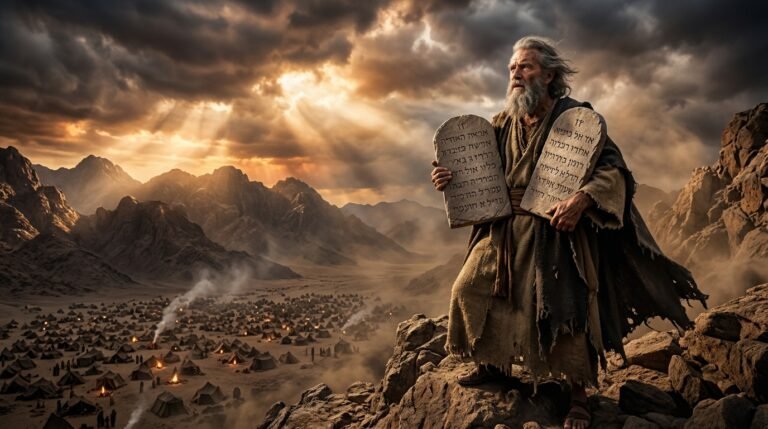
The Purana Ahd Namah, or Old Testament, covers the time before Jesus. It begins with creation and moves through the stories of Ibrahim, Musa, Dawud, and the prophets. The Naya Ahd Namah, or New Testament, centres on the life of Yasu Masih and the early Church. The word Ahd means covenant, so each part describes a promise between God and people, told from a different point in history. Keeping that word in mind helps the two halves feel connected.
A simple way to hold both parts together is a two-column chart. On the left, write an Old Testament promise or story. On the right, write where the New Testament picks it up again. Christians read many Old Testament passages as pointing toward Jesus, and a chart like this lets you see those links for yourself. It also makes a handy talking point for a family evening or a study group.
Bible ki Kahaniyon ko Bayan karne ke Ideas
Stories are where many people fall in love with the Bible. Bible kya hai becomes much clearer once you have met Yusuf in the well, Dawud facing Goliath, or the lost son walking home. Try retelling one story out loud, as if you were describing it to a friend over chai. Use your own words and your own pace, and keep only the parts that stay with you. Gaps and mistakes are fine, since you can always check the text afterwards.
You can also act the stories out, draw them as comic strips, or write them from a minor character’s point of view. What did the boy with the five loaves think as he handed over his lunch? Questions like that bring old events to life and keep you close to the text, because you have to check the details before you retell them. Even a short retelling can reveal things you missed on the first read.
Bible Verses ko Yaad Rakhne ke Ideas
Memorising a verse does not need to feel like school homework. Pick one short verse a week, such as a line from Zaboor 23, and write it on a sticky note for the bathroom mirror or the fridge door. Seeing it every day lets the words settle in without forced effort. Many people find that a verse they learned this way comes back to them on a hard day, right when they need it most.
Turn it into something creative. Hand-letter the verse as a small poster, set it to a simple tune, or record yourself reading it aloud and play it on the way to work. Children enjoy adding hand actions for each phrase. Whatever form you choose, repeat the verse a few times each day, and by the weekend it usually belongs to you. Then pick the next one and start again with the same easy rhythm.
Bible Study Group ke Ideas
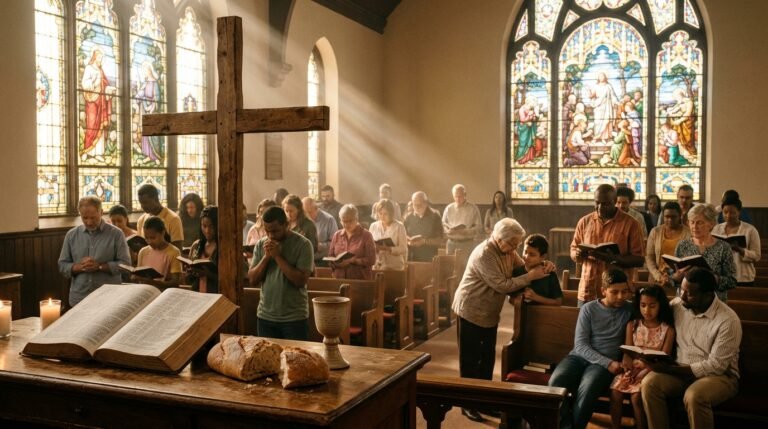
A study group turns private reading into shared conversation. Four to eight people is a comfortable size. Meet at a home, a church hall, or online, and agree on one chapter beforehand. When a group asks Bible kya hai at the first meeting, the answers are often wonderfully different, and those differences become the starting point for a lively and respectful discussion that nobody has to win. Everyone leaves knowing a little more than when they arrived.
Keep the format loose. Begin with someone reading the passage aloud, share what stood out, then talk about how it connects to daily life. Rotate the host every week so nobody feels in charge. Ask quieter members for their view first, because they often notice details the rest of the room has missed. Add tea and a small snack, and the evening becomes something people look forward to rather than a duty.
Bible kya hai Ideas for Kids
Children ask Bible kya hai in their own way, usually through questions like who wrote it or why it has so many stories. Answer with short, honest sentences and an illustrated storybook beside you. Young listeners remember characters far better than lists of facts, so begin with Nuh and the ark, Yunus and the big fish, or young Dawud with his sling. Let them interrupt, because their questions steer the conversation better than any plan.
Craft projects help too. Build an ark from cardboard, paint a rainbow, or make a paper chain with the names of the Bible’s books. Keep sessions short, since ten to fifteen minutes is plenty, and let the child lead. A relaxed, playful mood teaches more than a strict lesson ever could, and it keeps the Bible linked with warm memories that last well into adulthood. Older kids might enjoy drawing a map of a journey from one story.
Bible ke Tarjume aur Zubanon ke Ideas
The Bible was first written in Hebrew, with small portions in Aramaic, and the New Testament was written in Greek. Over the centuries it was translated into Latin, Syriac, Arabic, and hundreds of other languages so ordinary people could read it. When you look up Bible kya hai across languages, you will find that a single verse can sound quite different in each one, even when the meaning stays the same.
Comparing translations is a rewarding idea. Read one verse in a word-for-word translation, then in a thought-for-thought version, and notice what changes. Many readers keep two translations on the shelf: one for careful study and one for easy reading. Online Bible apps make this simple, and some even let you listen to a chapter in the language you grew up hearing at home. Small differences often spark the best questions.
Bible ki Tareekh ko Jaanne ke Ideas
Knowing where the Bible came from makes reading richer. The Old Testament writings were collected by the Jewish people over many centuries, and a Greek translation called the Septuagint appeared a few hundred years before Jesus. The New Testament Gospels and letters were written in the first century, then gathered and recognised by the early Church over the following generations. Seeing this slow process helps you appreciate how carefully the text was handed down.
To make the history stick, draw a long timeline on a roll of paper and pin it to the wall. Mark Ibrahim, Musa, Dawud, Yasu Masih, the early Church, the Latin Vulgate of Jerome, and the Gutenberg Bible printed around 1455. Seeing these events in one row explains why Bible kya hai is a question people still ask in so many countries today. Add new events as you learn them, and the wall slowly becomes a story.
FAQs About Bible kya hai Ideas
What is the Bible?
The Bible is the sacred scripture of Christianity, a collection of writings gathered into two main parts, the Old Testament and the New Testament. Christians believe these writings record God’s message to humanity and guide how people should live. When someone asks Bible kya hai, the short answer is that it is a holy book for believers and also one of the most influential books in world history.
Why is the Bible divided into Old and New Testaments?
The two parts mark two stages in the story Christians believe the Bible tells. The Old Testament covers the history, law, poetry, and prophecy that came before Jesus. The New Testament describes his life, teaching, death, and resurrection, along with the growth of the early Church. The Urdu word Ahd means covenant, and each part is named for the promise it describes.
How many books are in the Bible?
Most Protestant Bibles contain sixty-six books, with thirty-nine in the Old Testament and twenty-seven in the New Testament. Catholic Bibles contain seventy-three books, and Orthodox editions include a few more. The difference comes from which ancient writings each tradition recognises as part of its scripture, so check the edition on your shelf if the exact count matters to you.
In which languages was the Bible originally written?
The Old Testament was written mostly in Hebrew, with a few passages in Aramaic. The New Testament was written in Koine Greek, the common language of the Roman world in the first century. These texts were later translated into Latin, Syriac, Arabic, Urdu, and hundreds of other languages, which is why readers around the world can now open the Bible in their own tongue.
Where should a beginner start reading the Bible?
Most beginners find the Gospel of Yuhanna or the Gospel of Marqus an easy first step, because both tell the story of Jesus in a clear and direct way. Read one chapter a day and keep a notebook nearby for questions. Once you feel comfortable, move on to Paidaish to see how the whole story begins. A reading plan or a study partner also helps you stay steady.
Conclusion
Bible kya hai is a question with many doors, and this post has opened a few of them. You can read in Urdu, compare translations, retell stories, memorise a verse, or sit with a group and talk a passage through. None of these routes is better than the others. They are simply different ways in, so pick the one that feels closest to your own life and start there today.
Come back to these ideas whenever your interest dips. A new notebook, a fresh translation, or a new reading partner can restart your curiosity at any time. The next time someone asks you Bible kya hai, you will have more to say, and your answer will come from your own experience rather than from a borrowed script. Keep reading, keep wondering, and let your curiosity set the pace.